Jazz as Storytelling
Published October 9, 2026 · JAZZ
Improvisational jazz is a conversational story between players and the audience. It creates an emotional resonance that connects us all.
Jazz, especially in its improvisational form, transcends conventional storytelling by weaving narratives through musical interaction rather than words. This genre employs spontaneous exchanges—calls and responses, riffs, and thematic development—that engage both performers and audiences in a shared emotional journey.
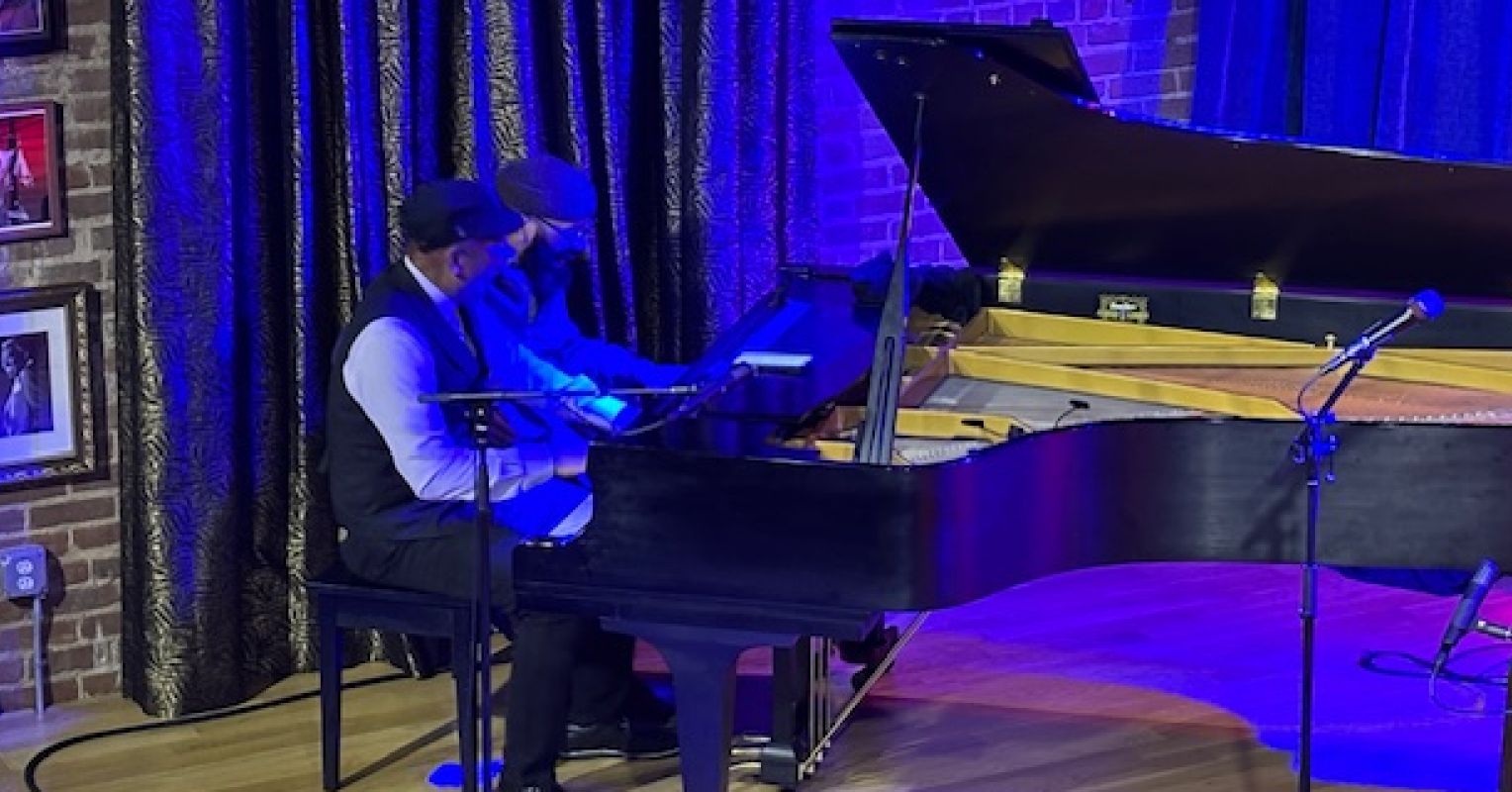
A recent performance at the revitalized Churchill Downs venue in Decatur, Georgia, highlighted the profound narrative power of jazz. Pianists Kenny Banks Sr. and Jr., a father-son duo, delivered a performance that exemplified how jazz can convey complex intergenerational stories through musical dialogue. Their seamless interplay on a single piano bench offered an intimate glimpse into their familial bond and collective musical identity.
Music and storytelling share a foundational function in human connection, but jazz uniquely integrates these by creating a conversation not only among musicians but also between performers and listeners. Neuroscientific research indicates that storytelling induces interbrain synchronization, an alignment of neural activity between the storyteller and audience, which is especially pronounced with uplifting narratives. This phenomenon mirrors findings in music cognition, where synchronous brain responses emerge during music listening, underscoring music’s role in fostering social cohesion.
The structure of jazz improvisation follows a narrative arc akin to traditional storytelling frameworks. According to music theorists, jazz solos often adhere to a tripartite pattern: an initial statement, a development introducing tension or variation, and a cohesive resolution. This progression crafts a compelling musical story that evolves in real time, shaped by the performers' interactions and the moment’s context.
The Banks duo’s rendition of a familiar jazz piece demonstrated how repeated stories gain new life through reinterpretation. Their performance was not a mere replication but a reinvention, adapting to their current dialogue and emotional landscape. This aligns with theories of storytelling as a dynamic process, adapted continuously to reflect the teller, listener, and occasion.
Jazz’s historical roots are deeply intertwined with cultural, social, and political movements, forging a genre that embodies resilience and identity. Parallel to family storytelling, where shared histories and evolving narratives build strength and continuity, jazz embodies a form of cultural memory and resistance expressed through sound.
The live experience of improvisational jazz thus represents more than entertainment; it is an active act of storytelling that bridges generational divides and personal histories. The Banks performance at Churchill Downs exemplifies this, as their musical conversation communicated nuances of relationship and heritage that words alone could not capture.
While the specific repertoire and full contextual details of the Banks performance remain limited, the event underscores the broader significance of jazz as a living narrative form. It reveals how improvisation not only sustains but also transforms musical and familial stories, fostering emotional resonance and collective understanding.
In sum, jazz’s improvisational nature allows it to function as a storytelling medium that is both deeply personal and communal. As demonstrated by Kenny Banks Sr. and Jr., jazz offers a unique space where music and narrative converge, creating enduring connections across generations and within communities.
Full story & global impact
This article was synthesized and rewritten by MusicTop Editorial from reporting published by psychologytoday.com. Read the publisher's report for the complete source context.
Read original source: psychologytoday.com